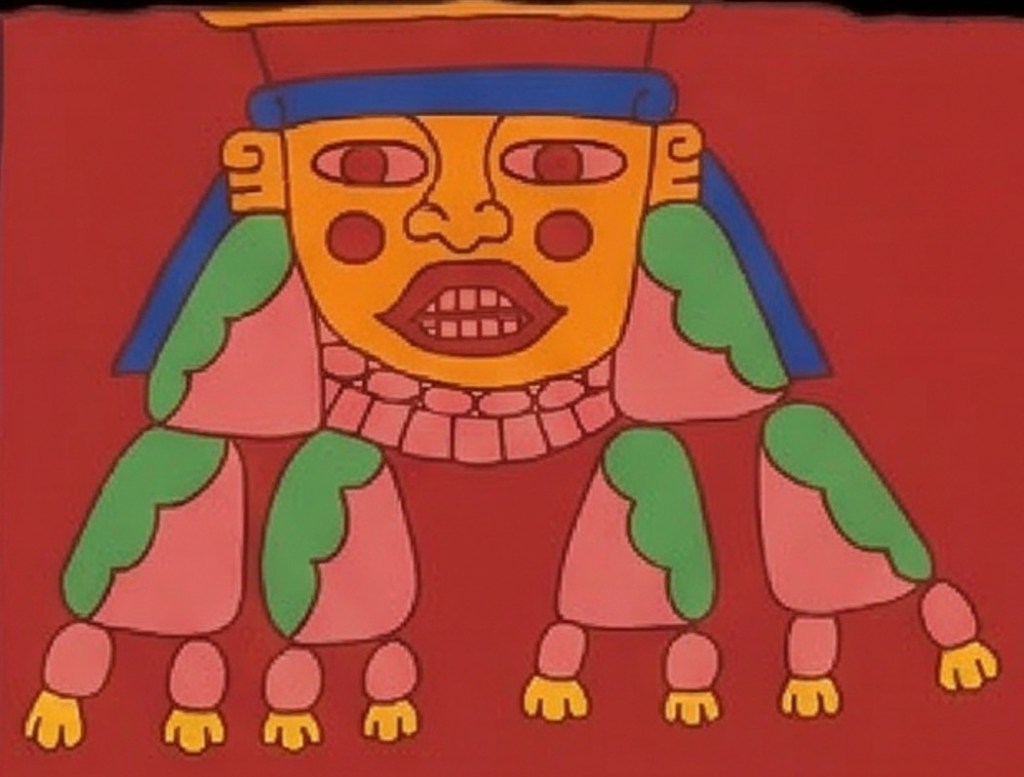
My article with Christophe Helmke, “The Language of Teotihuacan Writing”, is out in Current Anthropology 66(5):705–739.
The question of what language, if any, was recorded by the signs painted on the murals and ceramics of Teotihuacan has been contested for decades. We argue that these signs do constitute writing; that the system shares basic principles with other Mesoamerican scribal traditions, including the reading of logograms on the rebus principle; and that it employs a further principle we call double spelling. We argue that the script encoded a specific and identifiable language — a Uto-Aztecan language immediately ancestral to Nahuatl, Cora and Huichol — and we offer new readings of several Teotihuacan glyphs.
Rather than reading the signs through 16th century Nahuatl as has been attempted by others, we reconstructed a form of the language that would have been contemporary with the script itself and worked from there. Reading the glyphs through modern Nahuatl would be something like reading the Jelling runestones with modern Danish: related, but not the same language.
If the argument holds, it has several major implications for how we understand Mesoamerica. The conventional account has speakers of Nahuan languages arriving in central Mexico after the fall of Teotihuacan. A Uto-Aztecan language at Teotihuacan itself would instead suggest continuity, and make later Nahua populations the descendants of the city’s inhabitants rather than newcomers to an abandoned landscape.
The article was covered widely in the international press, including in The New York Times and El País.


Leave a Reply